Contact: sales@haomai.net

NEWS
Company News
Principle and Calibration Method of Power Frequency Variation Protection
Principle and Calibration Method of Power Frequency Variation Protection
Release Date: June 11, 2021Wuhan Haomai Electric Power Automation Co., Ltd.
When a short-circuit fault occurs in a power system, the short-circuit current and voltage can be decomposed into the current-voltage component of the pre-fault load state and the fault component. Relays responding to power frequency variation only consider the fault component and are not affected by the load state. The commissioning of the power frequency variation protection item of the NR Electric RCS-931 Line Protection Device is frequently encountered in actual work. This article introduces the commissioning method of power frequency variation protection using the dedicated module of the Relaystar-S60 Handheld Relay Protection Test System.
1 Principle of Power Frequency Variation Protection
The power frequency variation distance relay measures the amplitude of the power frequency variation of the operating voltage, with the action equation as follows:
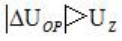
For Phase-to-Phase Faults:

For Ground Faults:

ZZD: The set impedance, generally taking 0.8~0.85 times the line impedance;
UZ: The action threshold, taking the memory value of the operating voltage before the fault.
For analog fault calibration, the above formulas are converted as follows:
Fault Line Voltage for Phase-to-Phase Faults:

Fault Phase Voltage for Ground Faults:

In the formula, m is the short-circuit impedance multiple: the protection shall reliably not operate when m=0.9, and shall reliably operate when m=1.1.
Taking the commissioning of the RCS-931 Line Protection Device as an example, the following section introduces the calibration method of power frequency variation protection using the dedicated commissioning module for power frequency variation of the Relaystar-S60.
2 Protection-Related Settings
- Setting of Protection Fixed Values and Control Words
|
No. |
Setting Name |
Value |
No. |
Setting Name |
Value |
|
01 |
Phase-to-phase Distance Zone I Setting |
2.0Ω |
02 |
Phase-to-phase Distance Zone II Setting |
4.0Ω |
|
03 |
Phase-to-phase Distance Zone II Time |
0.5s |
04 |
Phase-to-phase Distance Zone III Setting |
6.0Ω |
|
05 |
Phase-to-phase Distance Zone III Time |
1.0s |
06 |
Earth Distance Zone I Setting |
2.0Ω |
|
07 |
Earth Distance Zone II Setting |
4.0Ω |
08 |
Earth Distance Zone II Time |
0.5s |
|
09 |
Earth Distance Zone III Setting |
6.0Ω |
10 |
Earth Distance Zone III Time |
1.0s |
|
11 |
Power Frequency Variation Impedance |
3.0Ω |
12 |
Zero-sequence Compensation Coefficient |
0.67 |
|
13 |
Positive Sequence Sensitive Angle |
78° |
14 |
Positive Sequence Sensitive Angle |
75° |
|
15 |
Enable Power Frequency Variation Impedance |
1 |
16 |
Enable Auto-Reclosing |
1 |
- Setting of Protection Press Plates
In the Press Plate Settings, set the "Distance Protection Press Plate Input" to "1" and all other press plates to "0".Note: The power frequency variation impedance element is put into or out of service via the distance protection press plate.
On the protection panel, close the hard press plate for "Distance Protection".
3 Test Wiring

△ Wiring Diagram of RCS-931 Power Frequency Variation and Auto-Reclosing
Connect the voltage output terminals Ua, Ub, Uc, Un of the Relaystar-S60 to the AC voltage terminals Ua, Ub, Uc, Un of the protection device respectively.
Connect the current output terminals Ia, Ib, Ic of the Relaystar-S60 to the AC current polar terminals (IA, IB, IC) of the protection device respectively; short-circuit the AC current non-polar terminals (IA', IB', IC') of the protection device and connect them to the zero-sequence current polar terminal (IN), and finally connect back to the current output terminal In of the Relaystar-S60 from the zero-sequence current non-polar terminal (IN').
Connect the input contacts A, B, C, R of the Relaystar-S60 to the phase-separated trip output contacts Trip A, Trip B, Trip C and the Auto-Reclosing contact of the protection device respectively, and connect +KM to the common terminal of the protection device.
The switch position corresponding to the line here is "Closed Position", and the output wiring is not considered.
4 Calibration of Power Frequency Variation Protection Function
- Basic Parameter Setting
In the "Distance and Zero-Sequence" menu:
Tick the option for Power Frequency Variation Protection;
Set the pre-fault delay to 30s to ensure PT disconnection recovery and auto-reclosing charging;
Set the zero-sequence compensation coefficient to 0.67;
Select the single-phase tripping mode for this 220kV line protection.

△ Distance Protection Test Parameter Setting
- Parameter Setting on the Power Frequency Variation Page
Set the relevant fixed values according to the setting sheet;
Set the test current based on empirical values, and the test time is generally 0.1~0.2s longer than the fixed value time;
Tick the fault mode and select the positive direction fault type (an A-phase ground fault and a B-C phase-to-phase short circuit are ticked here).

△ Power Frequency Variation Parameter Setting
- Test Operation Method
Click Start Test or press the "Run" and "Confirm" keys on the keyboard to start the output of the Relaystar-S60;
The tester first outputs the no-load state, then the fault state until the protection trips reliably;
The input contact collects the action time, and the tester will automatically proceed with subsequent tests until all protection tests are completed;
Select whether to save the test results according to the prompt.
- Test Results
The input quantity records the test action information after the test is completed.

△ Protection Action Test Interface
The Relaystar-S60 automatically records the test results of the power frequency variation protection:
|
No. |
Short-Circuit Multiple |
Fault Type |
Trip A |
Trip B |
Trip C |
Reclose R |
Permanent Trip |
|
1 |
0.900 |
Phase A Ground Fault |
— |
— |
— |
— |
— |
|
2 |
0.900 |
Phase B-C Short Circuit |
— |
— |
— |
— |
— |
|
3 |
1.100 |
Phase A Ground Fault |
19 |
— |
— |
824 |
— |
|
4 |
1.100 |
Phase B-C Short Circuit |
20 |
20 |
20 |
— |
— |
Test Conclusion
The action status and action time information of various fault types of power frequency variation with auto-reclosing can be viewed through the test report. This test module facilitates the fast and efficient completion of the test items.
24-hours hot line 400-099-8859 technical hot line: 13971234137

Copyright © 2024 All rights Reserved.
备案号:鄂ICP备05010718号-1