Contact: sales@haomai.net
Incoming line ATS refers to the switching between two incoming line circuit breakers, with no bus tie circuit breaker. When the main line loses power and the standby line has power, the main power circuit breaker is tripped first, and then the standby power circuit breaker is closed.

In the scenario where #1 incoming line/transformer is in operation and #2 incoming line/transformer is on standby, DL1 and DL3 are closed, and DL2 is open. When the power supply of #1 incoming line/transformer is disconnected due to a fault or other reasons, the #2 incoming line/transformer standby power supply should be automatically switched in, and only one operation is allowed. For this purpose, a charging process similar to line automatic reclosing is designed, and the ATS can only operate after charging is completed.
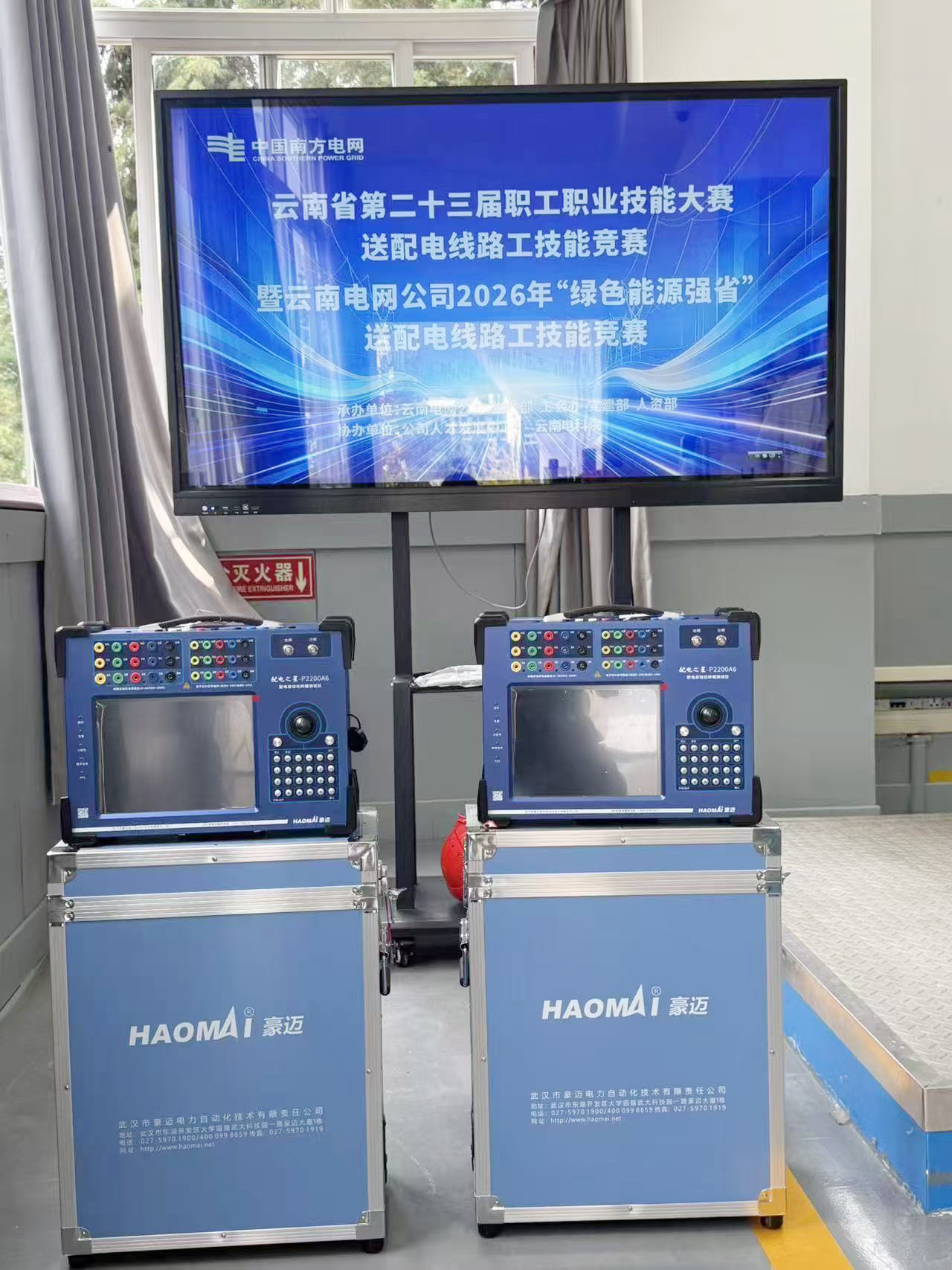
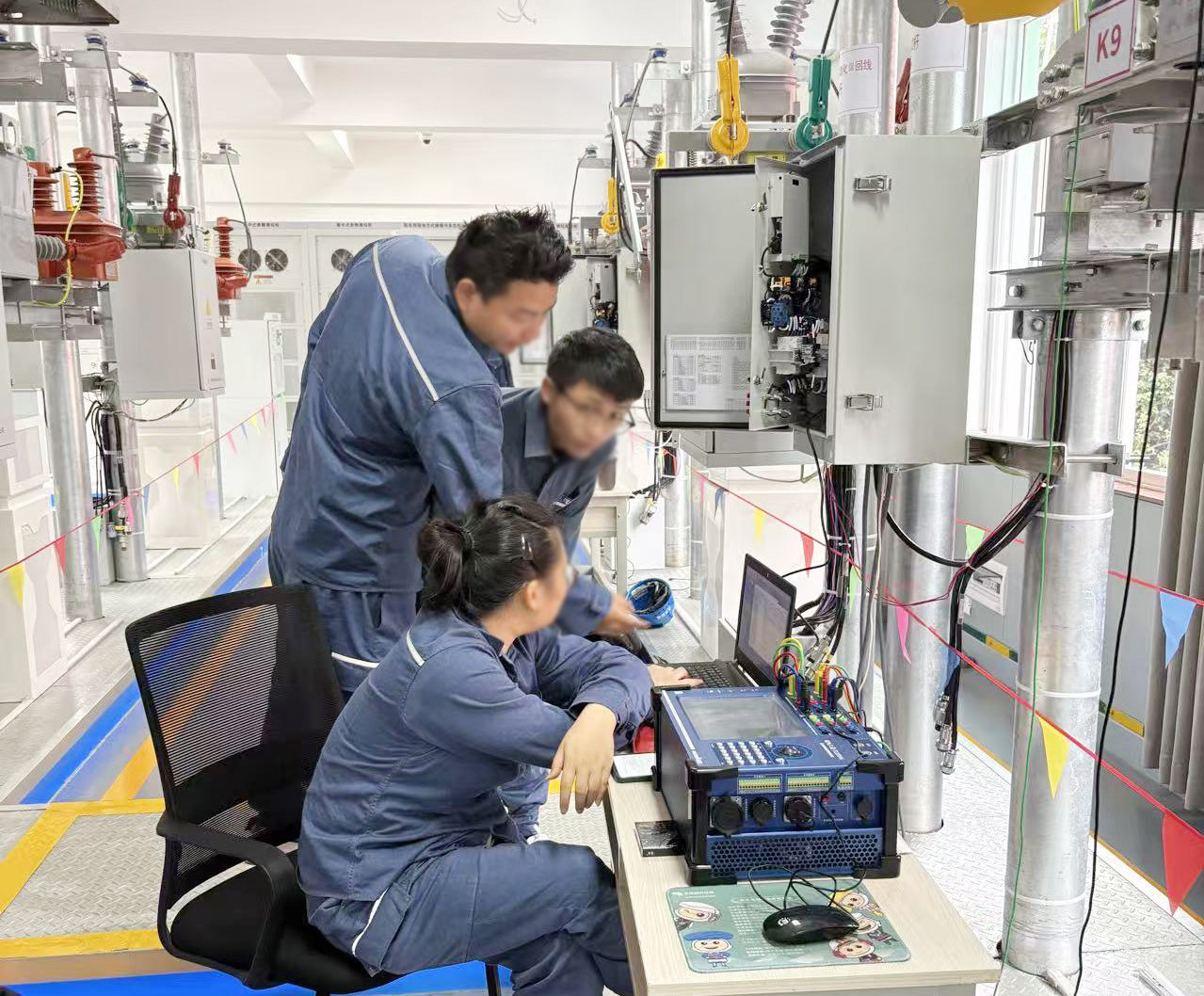
Below, we use the Relaystar-S60 Handheld Relay Protection Test System and NR Electric RCS-9651C Standby Power Automatic Transfer Device to perform this test.

△ Relaystar-S60 Handheld Relay Protection Test System
1 Protection Setting Configuration
|
No. |
Setting Name |
Value |
No. |
Setting Name |
Value |
|
01 |
Mode 1 Trip Time Delay |
0.2 s |
01 |
Mode 1 Trip Time Delay |
0.2 s |
2 Test Wiring

Connect the voltage output terminals "Ua", "Ub", "Uc", "Un" of Relaystar-S60 to the incoming line I bus voltage and incoming line II bus voltage of the protection device respectively. The voltage output terminals "UA", "UB", "UC" of Relaystar-S60 are connected to the I bus three-phase voltage and II bus three-phase voltage of the protection device.
Connect one end of the output contacts "Output 1, Output 2, Output 3" of Relaystar-S60 to "DL1 TWJ, DL2 TWJ, DL3 TWJ" of the protection device respectively, and connect the other end to the input common terminal of the protection device.
3 Test Method
State Sequence of Relaystar-S60
State ①: Normal voltage on I and II buses, normal voltage on incoming line II standby power supply, DL1 circuit breaker closed (Output 1 "DL1 TWJ" open), DL2 circuit breaker open (Output 2 "DL2 TWJ" closed), DL3 circuit breaker closed (Output 3 "DL3 TWJ" open). Set to key trigger, wait for charging completion.


State ②: Voltage loss on I and II buses, normal voltage on incoming line II standby power supply, DL1 circuit breaker closed (Output 1 "DL1 TWJ" open), DL2 circuit breaker open (Output 2 "DL2 TWJ" closed), DL3 circuit breaker closed (Output 3 "DL3 TWJ" open). Set to time trigger, with fault trip time greater than the setting value (0.5s).


State ③: Voltage loss on I and II buses, normal voltage on incoming line II standby power supply, DL1 circuit breaker open (Output 1 "DL1 TWJ" closed), DL2 circuit breaker open (Output 2 "DL2 TWJ" closed), DL3 circuit breaker closed (Output 3 "DL3 TWJ" open). Set to time trigger, with closing time greater than the setting value (3.5s).


State ④: Normal voltage on I and II buses, normal voltage on incoming line II standby power supply, DL1 circuit breaker open (Output 1 "DL1 TWJ" closed), DL2 circuit breaker closed (Output 2 "DL2 TWJ" open), DL3 circuit breaker closed (Output 3 "DL3 TWJ" open). Can be set to time trigger after 5s, the line resumes normal power supply.

4 Test Results
The entire test process consists of four states. The action sequence is:Both I and II buses have voltage. After charging is completed, simulate the fault and voltage loss of incoming line 1. After a time delay, DL1 trips, and after another time delay, DL2 closes, and the ATS operation is successful.(Input signals can be connected as needed to collect action time)
Copyright © 2024 All rights Reserved.
备案号:鄂ICP备05010718号-1